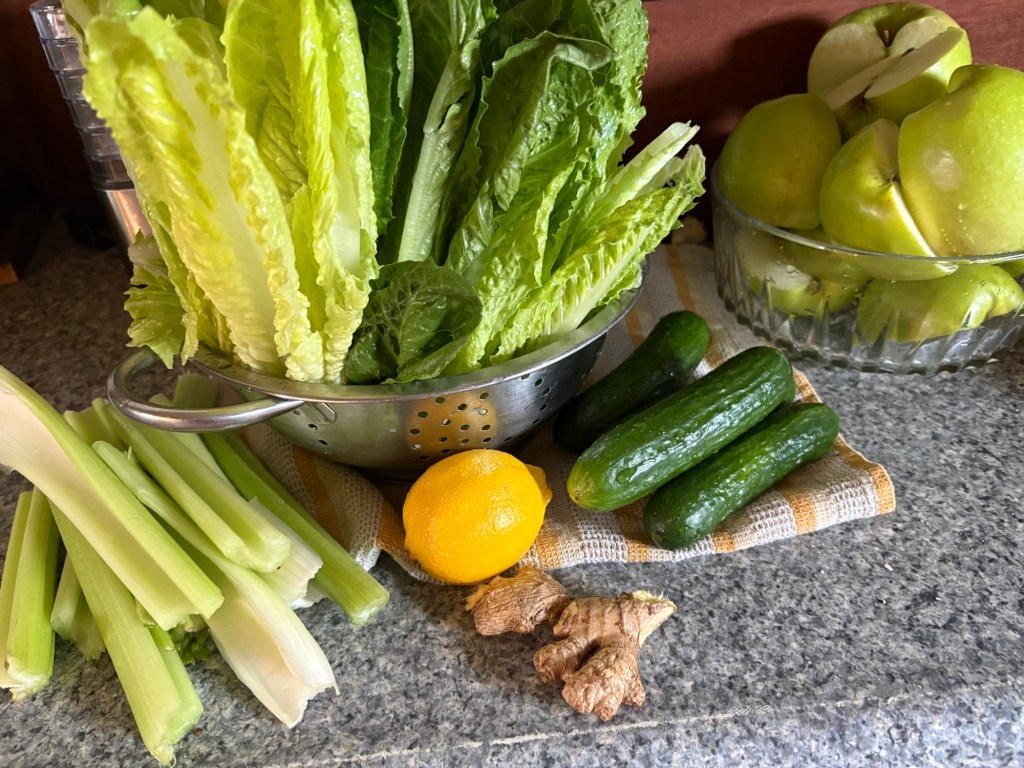
You’ve probably heard that catchy phrase on a weight loss commercial or read it in a nutrition book. “You are what you eat” is largely true and vital to our holistic wellbeing. As Hippocrates claimed, food is medicine. However, many of the practitioners who use the you-are-what-you-eat tag line to try to sell whatever health product they offer often overlook an equally fundamental truth:
You are what you THINK.
Proverbs 23:7 reads, “For as he thinketh in his heart, so is he…” (KJV). What are you thinking? What thoughts take up space in your mind? What do your thoughts reveal about who you are?

A few months ago, I joined a wellness challenge with a gal I met in my fitness group (see? I value physical wellness too!). One of the daily prompts was to read 10 pages of a non-fiction, wellness-type book. I chose Dr. Caroline Leaf’s book, Cleaning Up Your Mental Mess. Probably around 2 chapters in, I was already taking mental notes for a future blog article. Dr. Leaf’s book was just that good. Challenge: borrow or buy the book and commit to reading it! There’s a fascinating 2-minute quiz by Leaf titled, “How Messy is Your Mind” if you’re into self-evaluation.
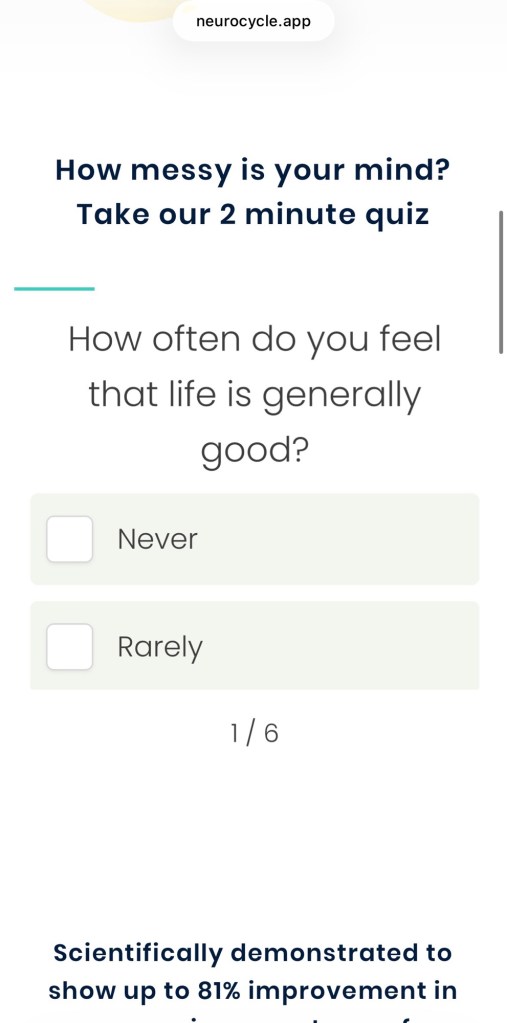
Dr. Leaf’s method of mind (not just brain) renewal uses the Neurocycle, which is a 63-day program using 5 steps to manage the mind, detoxify the brain, change thinking patterns, and improve mental health. You can check out the steps in her book or via the Neurocycle app. Jude Enajero, from Baylor University, describes Dr. Leaf’s system of mind management as an approach that “recognizes that genuine personal transformation entails the rewiring of neural pathways and the establishment of new, constructive habits” which “not only paves the way for enduring change but also cultivates a more balanced and resilient mental landscape.” Doesn’t that sound so similar to Romans 12:2? Let’s take a peek.
“Do not be conformed to this world, but be transformed by the renewal of your mind, that by testing you may discern what is the will of God, what is good and acceptable and perfect” (ESV, emphasis mine).

Don’t you just appreciate this example of how science proves what God has already taught us in His Word? As a former RN who loved psychiatric nursing, I love studying the brain and all its extraordinary nuances. Dr. Leaf dives deep into the science of how captivating our thoughts changes our brains. Thoughts are associated with the mind, so when we’re renewing our mind, we’re quite literally being transformed. And while in the scientific world, research such as this is touted as ground-breaking, really, it’s what God has told us all along.
The apostle Paul writes in 2 Corinthians 10:5, “We destroy arguments and every lofty opinion raised against the knowledge of God, and take every thought captive to obey Christ, being ready to punish every disobedience, when your obedience is complete” (ESV, emphasis mine).

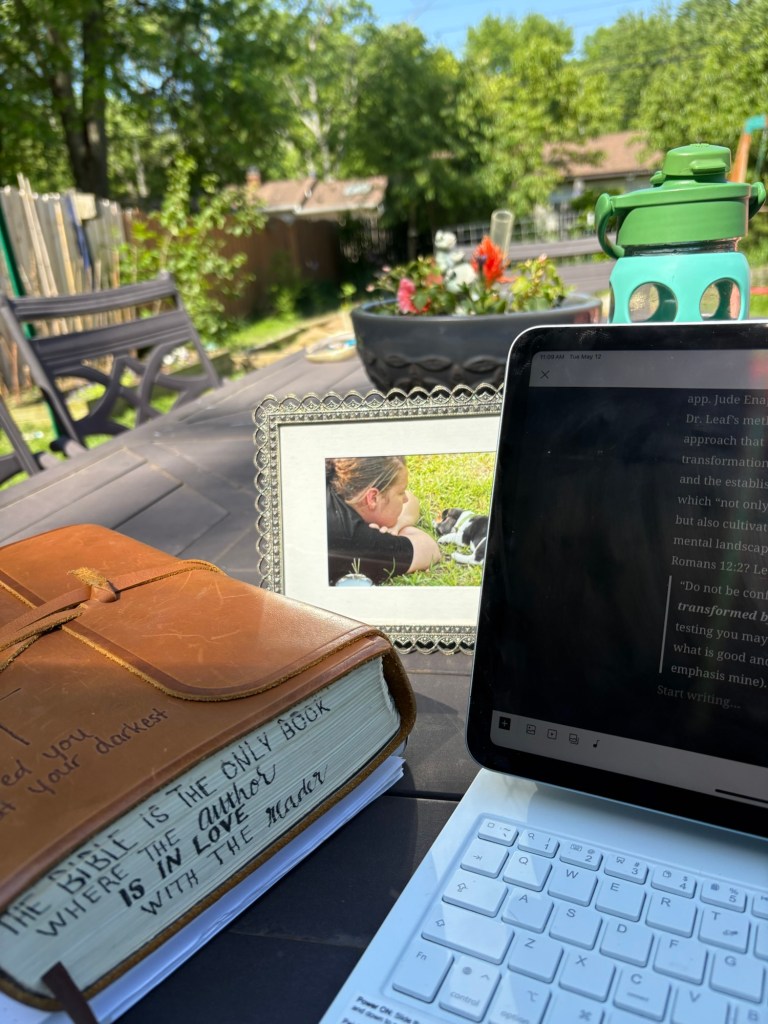
Holy Spirit plays a tremendous role in the renewal of our minds. My 9-year old daughter recently asked me to explain to her the Holy Spirit, and I really had to think long about an explanation. How do you describe Holy Spirit? I feel that so often we’re taught about God the Father and Jesus, but rarely shown who Holy Spirit really is. My pastor, CJ Johnson, puts it beautifully: “The Bible is God’s portrait of the Son painted by the Holy Spirit.” God’s Word was breathed by Holy Spirit’s inspiration. Spirit is author.
So, as I tried to paint my best portrait of the Spirit to Lily Willow, I bumped into the fact that it’s because of the Holy Spirit’s work that we can be transformed by the renewing of our minds. Check this out— “…to put off your old self [because that’s what we’re discussing here, coming as we are, but leaving changed], which belongs to our former manner of life and is corrupt through deceitful desires, and to be renewed in the spirit of your minds and to put on the new self [leaving changed], created after the likeness of God in true righteousness and holiness” (Ephesians 4:22-24, emphasis mine).

Like me, maybe you’re considering, “but how?” Again, the apostle Paul informs us in Titus 3:4-6 “but when the goodness and loving kindness of God our Savior appeared, he saved us, not because of works done by us in righteousness, but according to his own mercy, by the washing of regeneration and the renewal of the Holy Spirit, whom he poured out on us richly through Jesus Christ our Savior” (emphasis mine). So, if the regeneration and renewal is Holy Spirit’s work, what is my part? Let’s take a look at Psalm 51:10-12:
“Create in me a clean heart, O God, and renew a right spirit within me. Cast me not away from your presence, and take not your Holy Spirit from me. Restore to me the joy of your salvation, and uphold me with a willing spirit.”

- AWARENESS & ASSESSMENT: Self-Evaluation
Immediately, I notice some awareness and assessment taking place. This particular psalm was penned by David after being confronted by the prophet Nathan after David committed adultery with Bathsheba. David’s realizing that his unclean mind led to an unclean heart.
- APPEAL
After realizing his heart and mind needed transformation, David appealed to God to renew him. He came as he was, encountered God, and left forever changed.
- ACCOUNTABILITY
David pleaded with God to stay with him and not take Holy Spirit away. He wished to remain in God’s presence knowing that there was accountability there. David pursued a relationship with God so that there would be that continual renewing of the mind through Holy Spirit (this is how our conscience works).
- APPLICATION
Because of his relationship with and accountability to God, David was willing to take the necessary steps to remain changed. Despite his horrible sins, including a murder, God changed David and restored his joy.

My husband has several long term friendships with a couple individuals who have wildly different worldviews than Rudy. Recently, he was in a conversation with a lady where some hot political and Christian-related topics came up. This lady, who does not hold a biblical worldview asked Rudy, “Do you mean to tell me if a pedophile was on his deathbed and asked forgiveness, he’d go to heaven?!” And Rudy vehemently answered, “yes!” Our God is just that good! There are no limits or exceptions to His love and forgiveness, and we can come to Him and be truly, radically changed. Renewal, the putting off of the old self and putting on of the new self, begins in the MIND by the Spirit.

What does it look like to be transformed by the renewing of the mind? I end here with where I started—the question:
What are you thinking?

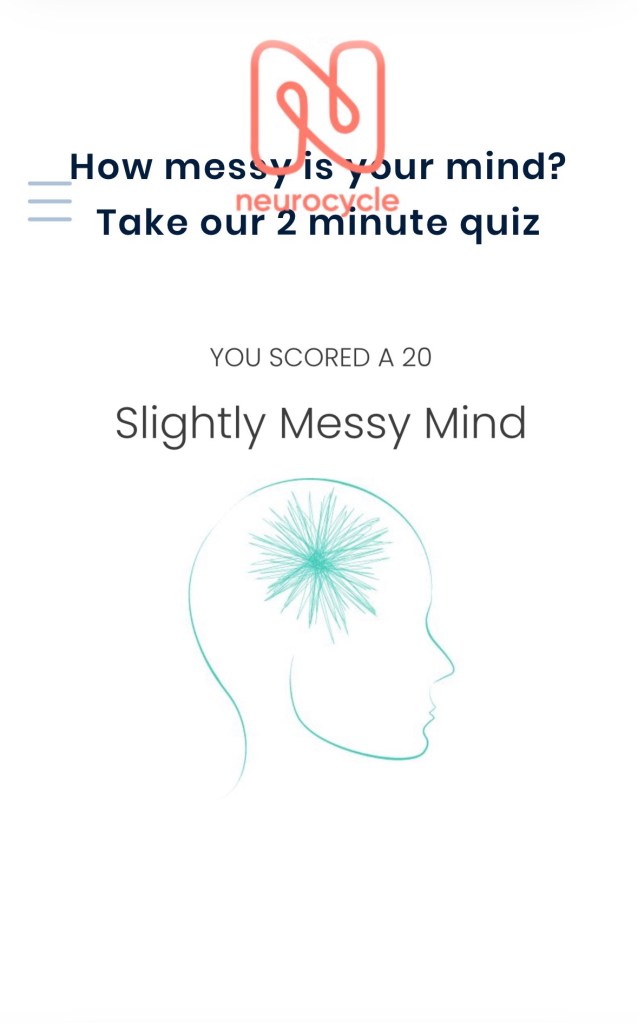
1. Using David’s example in Psalm 51:10-12 as a guide, the first step is to self-evaluate through assessment. Confession—remember Dr. Leaf’s 2-minute quiz “How Messy is Your Mind?” I scored a 20, which the quiz determined as a Slightly Messy Mind. Obviously, I need to tend to some mind-renewing!
2. The second step is to appeal for help. This year, I’m reading through Charlotte Gambill’s yearlong devotional Breathe. A couple days ago, Charlotte shared a story where she noticed the question “How’s my driving” pasted on the back of a semi-truck. Charlotte applied this to her own life by asking herself, “How’s my doing?” She went on to ask those close to her how they felt she was doing, then she could make improvements accordingly. I want to take this just a step further and have us consider together, “How’s my thinking?” Ask those you trust to invest into your life. Ask Holy Spirit—after all, His work is regeneration and renewal!
3. Appealing for help brings us to the third step—accountability. While we come as we are to God and leave changed with Holy Spirit dwelling within and coming along for the ride, so to speak, having a trusted mentor makes the journey go a bit more smoothly. Having an accountability partner keeps awareness on your thoughts.
4. The final step is application. What is a practical way we can apply what we’ve learned about our minds through self-assessment, appeal, and accountability? The apostle Paul effectively answers this question in Philippians 4:8-9:
“Finally, brothers, whatever is true, whatever is honorable, whatever is just, whatever is pure, whatever is lovely, whatever is commendable, if there is any excellence, if there is anything worthy of praise, think about these things…practice these things, and the God of peace will be with you.”

Aren’t you glad he wrote to practice these things? Not get them right the first time, not to get them perfect, but to practice these things. Practice requires action and effort; a continuous renewal. Find an accountability partner and/or talk to God about your thoughts. He made your beautiful mind; He cares! Set aside some time for reflection and evaluation using Philippians 4:8 as a guideline:
Is what I’m thinking…
- True?
- Honorable?
- Just?
- Pure?
- Lovely?
- Commendable?
- Excellent?
- Worthy of Praise?
If not, practice. Practice doesn’t always make perfect, but practice does always make progress.


In the previous blog, I mentioned that this blog would focus on being a new creation in Christ. When I started writing, I felt led in a different direction. This mind-renewal matter has been on my mind and heart for months, and now is the time to share what Holy Spirit has been teaching me. Unless I’m led on a different path again, I’ll pick up with some thoughts about being a new creation next blog. But, thinking about it, transformation and new creation are parts of the same whole, right? ;).